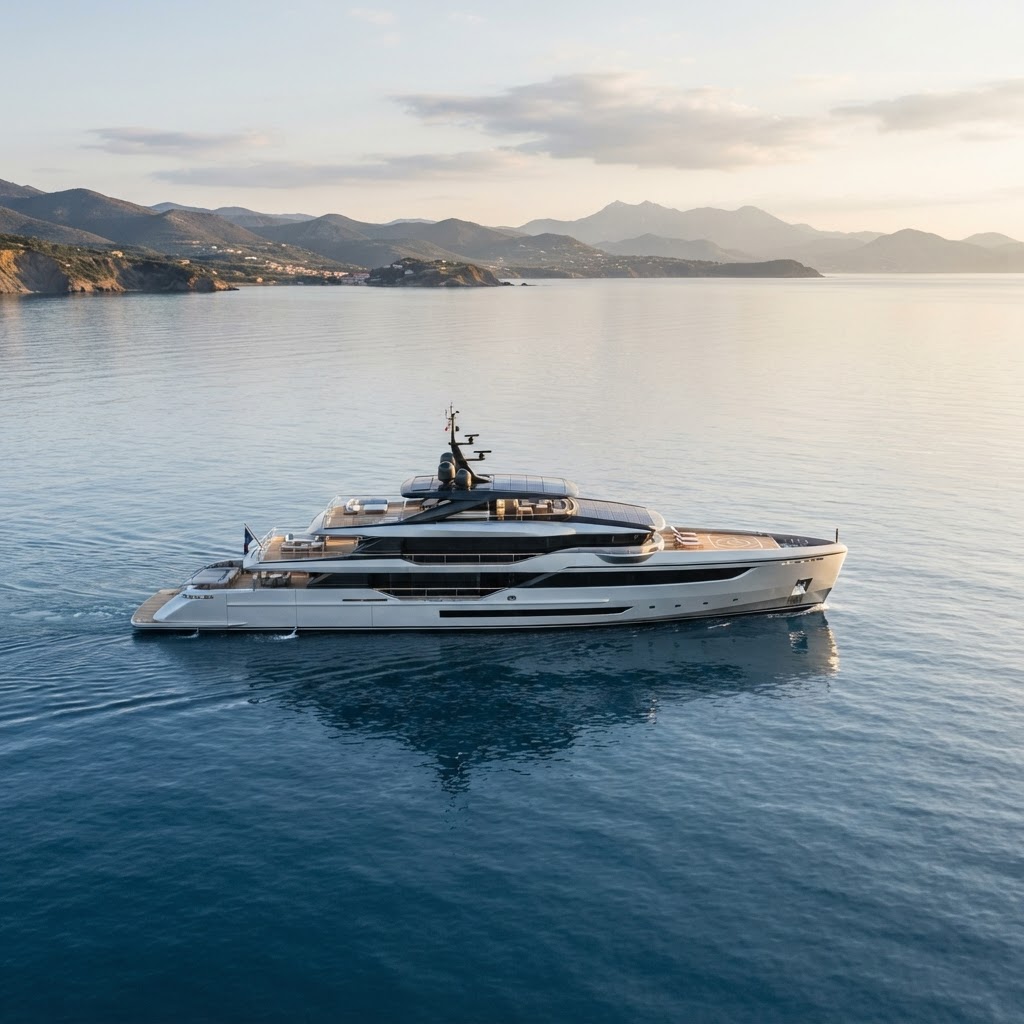
The sea has always been the ultimate measure of our ambition. To stand upon the deck of a yacht as it cuts through the glass-like surface of a Mediterranean dawn is to experience a singular form of liberty. Yet, the evolution of the superyacht is currently undergoing its most profound transformation since the transition from sail to steam. We are entering an era where the vanity of power is being replaced by the elegance of efficiency, a shift that does not merely acknowledge our environmental responsibilities but seeks to redefine the very essence of luxury at sea.
The Architecture of Conscience
Historically, the superyacht was a manifestation of raw, untethered energy. The larger the vessel, the more fossil fuel it demanded to propel its steel bulk across the ocean. Today, however, the conversation in the shipyard has pivoted toward the architecture of conscience. Naval architects and engineers are no longer tasked solely with optimising top-end speed; they are now mastering the art of the lighter footprint. This is not a retreat from performance, but an evolution into a more sophisticated paradigm where sustainability informs every line of the hull.
Modern design firms are utilising advanced computational fluid dynamics to reduce hydrodynamic drag to a fraction of what was considered acceptable a decade ago. By refining the underwater geometry, vessels can achieve greater range with lower fuel consumption. This is the new luxury: a yacht that is not only faster or more opulent, but one that moves through the water with the grace of a predator, leaving behind nothing but the faintest of wakes. It is a quiet revolution, unfolding in the sterile, high-tech environments of naval design studios, yet its implications echo across the entirety of our blue planet.
The Hybrid Heartbeat
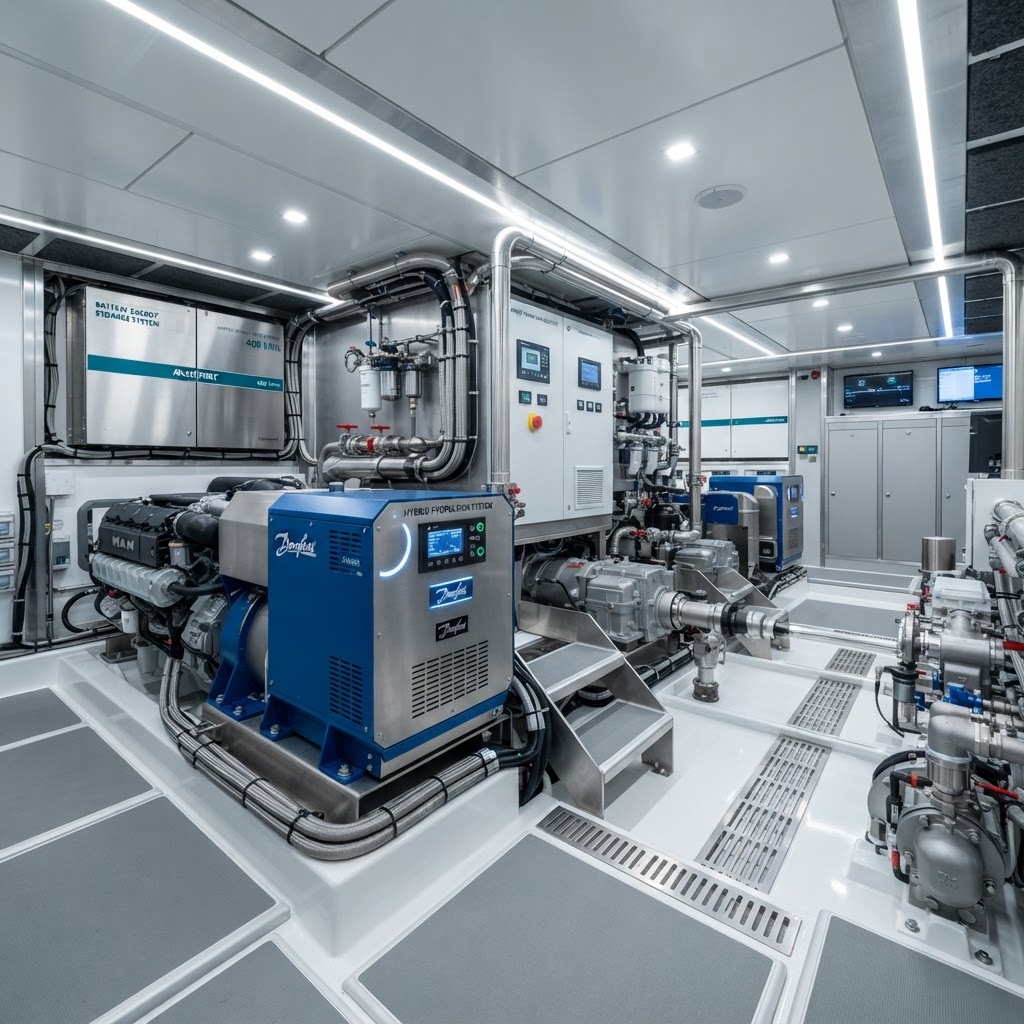
At the centre of this transformation is the departure from traditional, diesel-dependent propulsion systems. We are witnessing the widespread adoption of diesel-electric hybrid architectures, which offer a level of versatility that was once the stuff of speculation. By decoupling the engines from the propellers, designers can now ensure that generators operate at their most efficient load, while battery banks provide the silent, vibration-free movement that defines the modern charter experience at anchor.
This hybridisation is more than a technical upgrade; it is a fundamental improvement in the quality of time spent at sea. When the engines shut down and the yacht drifts silently into a secluded cove, powered entirely by lithium-ion storage, the connection between the guest and the environment becomes palpable. The intrusive drone of machinery is replaced by the gentle lap of water against the hull. It is in these moments of near-total silence that one truly appreciates the ingenuity of the hybrid system. It allows the vessel to exist as a guest of the sea, rather than a conqueror of it.
Harvesting the Sun and the Breeze
Beyond the propulsion system, the integration of renewable energy generation is becoming an aesthetic and functional priority. Solar glass and flexible photovoltaic membranes are now being seamlessly integrated into the very skin of the superstructure. Where once solar panels were considered an eyesore, the modern yacht features them as an invisible utility, draped across awnings or laminated into deck structures to trickle-charge the house batteries during the long, sun-drenched days of a summer cruise.
Wind, the oldest driver of maritime discovery, is also making a sophisticated return. Automated, rigid-wing sails are appearing on the most forward-thinking projects, offering the ability to supplement engine power during long blue-water passages. These systems require little intervention, adjusting themselves automatically to the prevailing wind conditions to reduce the fuel burn of the main propulsion plant. It is a poetic symmetry: using the ancient force of the wind to carry us into the future of clean exploration.
Materials and the Circular Economy
The environmental impact of a yacht is not confined to its years of service; it begins on the factory floor and extends well beyond its decommissioning. The vanguard of sustainable yachting is now considering the full lifecycle of materials. We are seeing a shift away from traditional, carbon-heavy composites toward bio-resins and recycled carbon fibres. Even the interiors are being reimagined, with designers opting for sustainably sourced woods, recycled textiles, and low-VOC paints that ensure the air quality within the vessel is as clean as the breeze outside.
This commitment to the circular economy extends to how vessels are maintained. Modular construction techniques allow for components to be upgraded or replaced without necessitating a total refit, extending the viable lifespan of the yacht. It is a move toward a more rational, enduring form of luxury. A superyacht, after all, is a significant investment in engineering and artistry; it stands to reason that we should build them with the intention that they might remain relevant and responsible for generations to come.
The Future of Remote Exploration
As we look toward the horizons that remain unexplored, the role of the sustainable yacht becomes even more critical. The most pristine corners of the globe—the archipelagos of the South Pacific, the glacial fjords of the high north—are the most vulnerable to human encroachment. A vessel designed with low-impact technology is not merely a preference; it is a necessity for those who wish to visit these places with respect.
These explorers of the new age require vessels that can operate in absolute silence, minimising the disturbance to marine life and maintaining the integrity of the fragile ecosystems they visit. The ability to switch to 'zero-emission mode' when entering a protected marine sanctuary is perhaps the ultimate expression of the modern yachtsman’s philosophy. It is an acknowledgement that the privilege of exploring these wonders comes with the burden of protecting them. We are no longer merely owners of yachts; we are stewards of the seas.
A Legacy of Lightness
The trajectory of yacht design is clear. The era of ostentatious waste is fading, giving way to a period of thoughtful, enlightened engineering. As we embrace hybridisation, renewable energy, and sustainable materials, we are not sacrificing the romance of the sea; we are preserving it. The future of yachting is defined by lightness: a lighter touch on the environment, a lighter soundscape, and a deeper, more profound connection to the natural world.
Ultimately, the superyacht remains a vessel of discovery, a mobile island that allows us to find solace in the vastness of the ocean. By aligning our technological capabilities with the rhythms of the natural world, we ensure that the horizon remains as open and inviting for the next generation as it is for our own. The true measure of a great yacht is no longer how it dominates the waves, but how it allows us to exist in harmony with them. In the quiet, clean power of the modern fleet, we find the promise of a long and storied future for all who are called to the sea.