For decades, the interior architecture of the superyacht was tethered to a rigid, often ostentatious interpretation of grandeur. It was an aesthetic defined by gold-leaf flourishes, mahogany panelling of oppressive depth, and a desire to import the stuffy formality of a Parisian hôtel particulier onto the decks of a vessel designed for the fluid freedom of the Mediterranean. Yet, as we navigate into the third decade of the twenty-first century, a quiet revolution has taken hold. The heavy drapes are being drawn back, the ornate veneer is being stripped away, and we are witnessing the emergence of a new golden age in yacht interior design—one that prizes the transformative power of light, the honesty of raw materials, and a sense of luxury that speaks in whispers rather than shouts.
The Architecture of Illumination
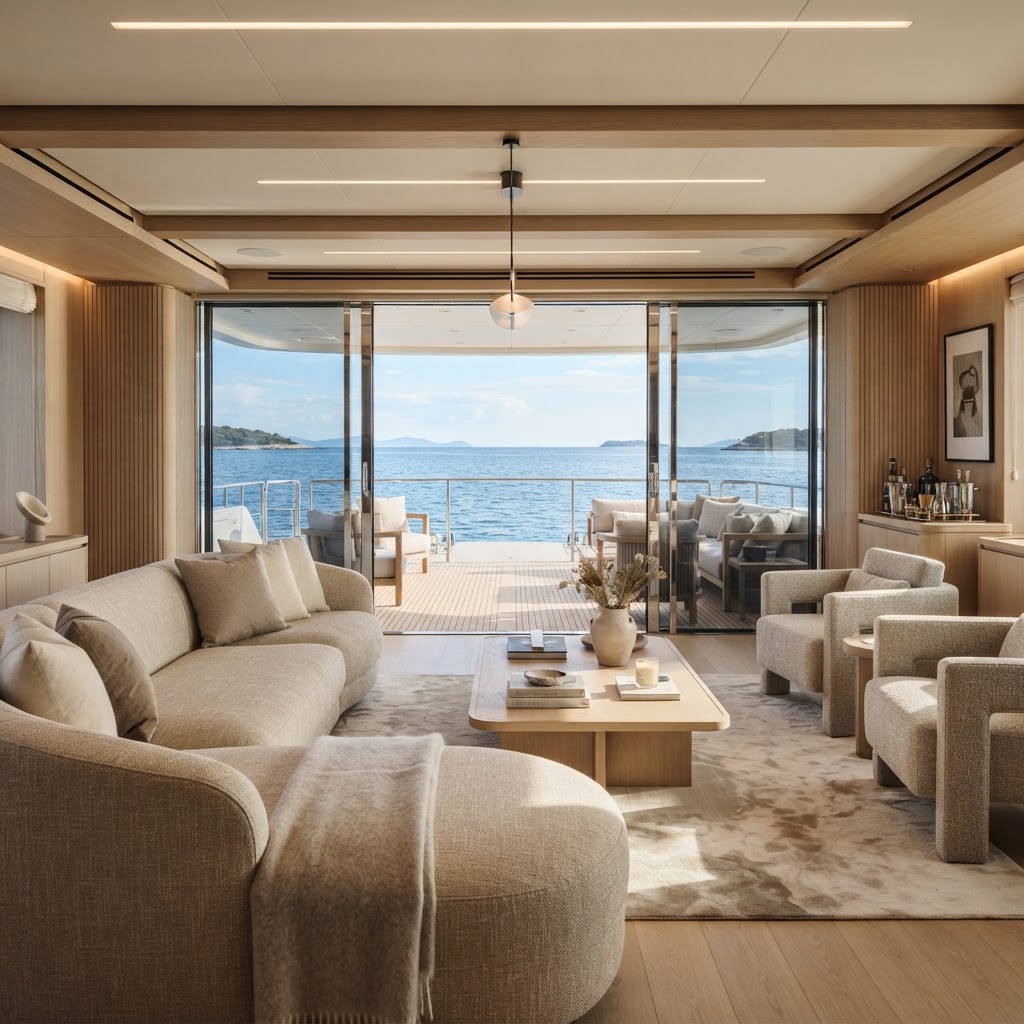
At the heart of this evolution is a fundamental reconsideration of how light interacts with the vessel. Historically, yacht interiors were often inward-looking, prioritising privacy and a hermetic sense of security. Today, leading naval architects and interior designers are treating light as a primary structural element. The goal is to dissolve the boundaries between the interior saloon and the horizon beyond. By employing expansive, frameless glazing and clever, recessed aperture designs, designers are allowing the sea to dictate the colour palette of the living spaces.
This is not merely a matter of installing larger windows. It involves an intricate dance of reflection and refraction. The use of light-reflecting surfaces, such as brushed limestone floors or silk-woven wall coverings that capture the crystalline shimmer of the morning sun, transforms the interior from a static room into a kinetic environment. As the sun moves across the sky, the interior follows, shifting from the soft, pearlescent glow of dawn to the deep, golden embers of twilight. In this new paradigm, the yacht is no longer a floating fortress, but a lens through which the ocean is observed with renewed clarity.
The Tactile Turn
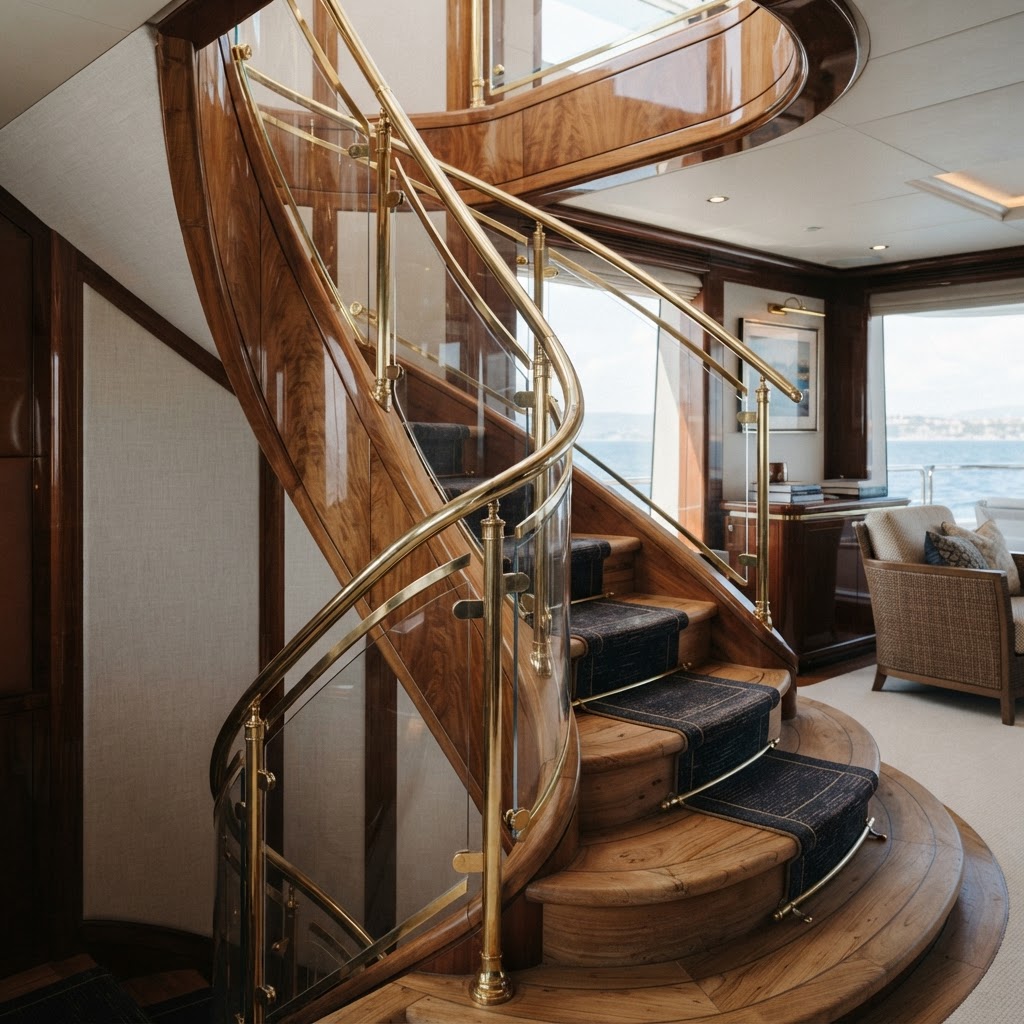
There is a profound shift occurring in the material world of yachting. For too long, the industry was obsessed with high-gloss finishes—surfaces so pristine they felt cold to the touch and intimidating to the inhabitant. We are currently seeing a move towards 'tactile honesty'. This involves the integration of natural, organic materials that age with grace: sand-blasted oak, raw honed marble, heavy linens, and bouclé wools that invite one to settle in rather than sit on edge.
This move towards texture serves a psychological purpose. When one is at sea, the environment is often defined by the smooth, rhythmic movement of water. By grounding the interior in materials that feel authentic—materials that possess a 'grain' or a sense of history—designers are creating a necessary contrast. A hand-carved coffee table that bears the subtle imperfections of the wood, or a bulkhead lined in soft, vegetable-tanned leather, provides a grounding presence. It bridges the gap between the mechanical precision of the ship’s engineering and the organic, untameable nature of the sea itself.
Quiet Luxury as a Design Philosophy
'Quiet luxury' has become a ubiquitous term in fashion, but its application to yachting is particularly potent. On the water, where the vastness of the ocean can feel overwhelming, the interior must provide a sanctuary of calm. Designers are abandoning the 'show-piece' mentality in favour of a restrained elegance. This is characterised by a monochromatic or neutral colour scheme, where visual interest is derived from depth rather than decoration.
True luxury today is defined by the absence of noise—both visual and auditory. Bespoke joinery now hides the myriad electronic systems that power modern life, replacing cluttered consoles with seamless, clean surfaces. The furniture is chosen not for its brand pedigree, but for its ergonomic harmony with the vessel’s specific geometry. There is a move away from furniture that feels 'placed' within a room, towards bespoke, integrated pieces that seem to emerge organically from the architecture of the ship. This approach respects the yacht as a cohesive vessel, rather than a collection of curated rooms.
The Holistic Integration of Nature
Perhaps the most daring departure in recent years is the integration of living ecosystems within the design. We are seeing the rise of internal gardens, vertical moss walls, and water features that echo the ocean outside. These are not merely decorative elements; they represent a desire to maintain a connection with the biosphere. In the confined space of a yacht, a curated indoor garden serves to purify the air, soften the acoustic quality of a room, and provide a constant, shifting visual reference to the natural world.
By bringing the outside in, designers are successfully mitigating the 'cabin fever' that can occasionally arise on extended voyages. This biophilic design approach is a recognition that our wellbeing is inextricably linked to our proximity to nature. When a guest can look from a sofa upholstered in sustainable fibres to a lush, living wall, the psychological barrier between the vessel and the wild, blue expanse is significantly diminished. It is a sophisticated way of acknowledging that while we may seek the comfort of a luxury yacht, we never wish to be fully divorced from the environment that makes our presence on the water so profound.
Towards a Sustainable Future
One cannot discuss this new golden age without addressing the growing imperative of environmental consciousness. The modern yacht owner is increasingly discerning about the provenance of their surroundings. This has led to a renaissance of craftsmanship, where local artisans are commissioned to provide bespoke stonework, artisanal ceramics, and hand-woven textiles. The narrative of the object—the story of where it was sourced and who crafted it—has become part of the luxury experience.
This shift towards artisanal sourcing also carries a significant ecological benefit. By reducing the reliance on mass-produced, chemically-treated materials and moving toward sustainably harvested woods and natural, biodegradable fabrics, the industry is aligning itself with the very ocean it depends upon. The new luxury is not just about what is on board, but how it got there and the footprint it leaves behind. It is a philosophy that embraces long-term endurance over fleeting trends, reflecting a maturity in the design market that has been a long time coming.
The Horizon Ahead
As we look toward the future, it is clear that the standard for yacht design will continue to be set by those who understand the nuance of human experience. The era of the gaudy spectacle has, thankfully, begun to wane. In its place, we find a design language that is empathetic, quiet, and deeply attuned to the rhythms of the sea. By prioritising light, texture, and natural harmony, contemporary designers are creating vessels that are not merely modes of transport, but true homes that stand as testaments to the beauty of the horizon.
These yachts do not fight the sea, nor do they try to replicate the static comfort of an urban penthouse. Instead, they exist in a graceful tension between the two, offering a refuge that is as boundless and serene as the waves they navigate. For the modern traveller, this is the ultimate luxury: a space that allows you to be fully present, fully connected, and utterly at peace within the vast, indifferent beauty of the ocean.