There is a particular stillness that settles upon the deck when the engines are cut in the deep blue waters of the Ligurian Sea. It is a transition from the mechanical rhythm of passage-making to the primordial hum of the ocean itself. For the yachting enthusiast, the Mediterranean is often perceived as a theatre of social grace and architectural majesty, a maritime corridor defined by the silhouette of rugged cliffs and the polished teak of one’s own vessel. Yet, beneath the glass-like surface, there resides a community of cetaceans whose presence offers the most profound luxury of all: a fleeting, intimate connection with the wild. To encounter a fin whale as it breaches the horizon, or to witness a pod of Risso’s dolphins weaving through the wake, is to be reminded that we are merely guests in an ancient, undulating empire.
The Pelagos Sanctuary and the Geometry of the Deep
Between the shores of France, Monaco, and the Italian coastline, including the northern stretches of Corsica, lies the Pelagos Sanctuary. It is a vast protected zone, a maritime conservation effort that honours the ecological significance of these waters. For those navigating these latitudes, it is crucial to understand that this is not merely a cruising ground, but a nursery and a feeding station. The bathymetry of the Mediterranean, with its deep canyons and steep continental slopes, creates a unique confluence of nutrients, particularly in the summer months when the upwelling of cold, mineral-rich water fuels the pelagic food chain. This is where the fin whale, the second-largest creature to have ever graced our planet, finds the krill essential for its survival. As you glide silently past the canyons off the coast of Nice or Genoa, you are moving through a landscape as significant and delicate as any terrestrial wilderness.
The Fin Whale: A Master of the Mediterranean Horizon
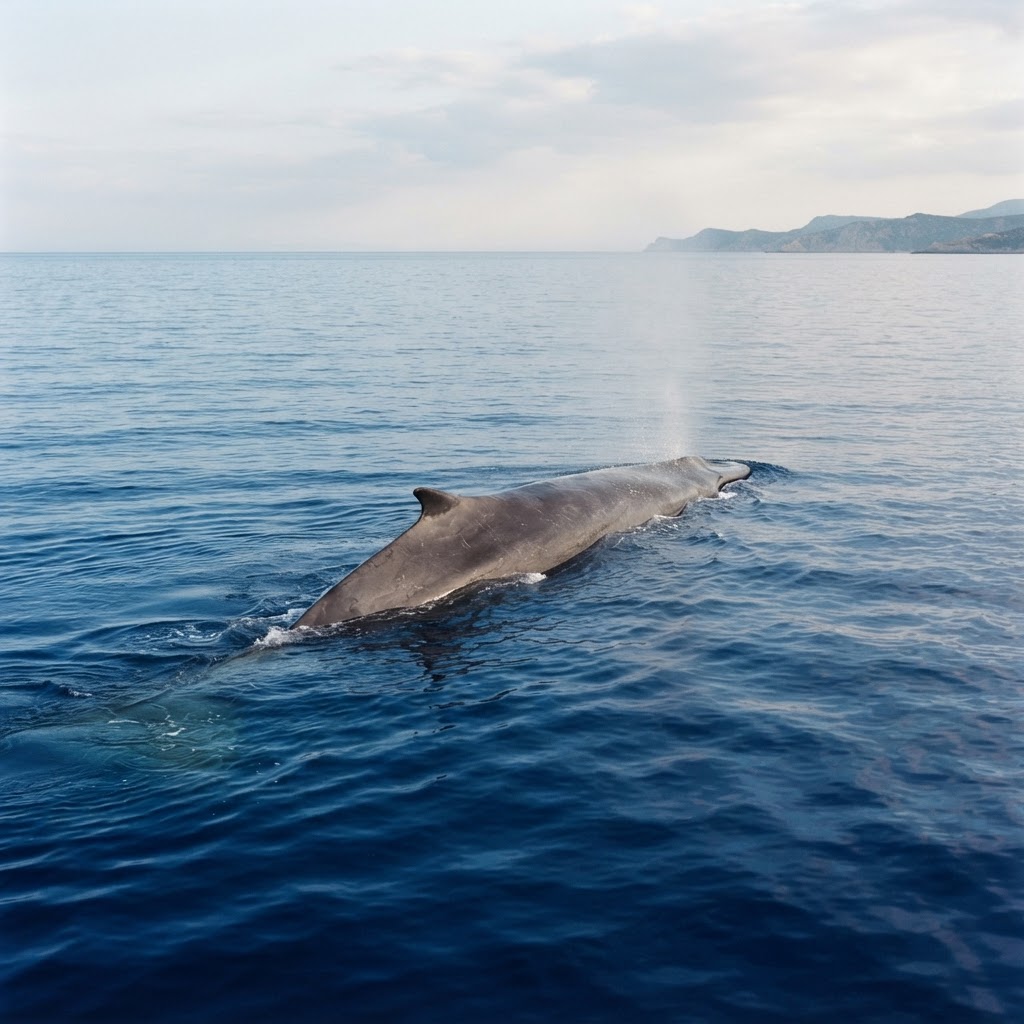
To witness a fin whale is to experience scale in a way that defies conventional travel narratives. They are the silent giants of the inland sea, growing to lengths that dwarf even the most expansive superyachts. They are distinct in their grace, moving with a fluid, piston-like efficiency that belies their mass. Unlike their larger cousin, the blue whale, the fin whale possesses a sleek, streamlined profile that seems designed for high-speed transit through the abyss. During the warmer months, these whales migrate through the sanctuary, their blow a plume of mist that catches the Mediterranean light like a splinter of diamonds. For the observer on the aft deck, the encounter is rarely loud; it is a soft, rhythmic exhaling followed by the slow, deliberate arch of a slate-grey back. Patience is the only currency of value here. To pursue them is to invite their departure; to wait is to invite their curiosity.
The Diversified Pods of the Riviera and Beyond
While the fin whales provide the grandeur, it is the smaller cetaceans—the dolphins and pilot whales—that provide the vitality of the Mediterranean experience. The striped dolphin, with its vivid, lightning-bolt markings, is perhaps the most iconic resident, often found in large, playful social groups. They are the acrobats of the sea, capable of extraordinary leaps that seem to defy the laws of physics. Then there is the Risso’s dolphin, a more enigmatic creature often found in the deeper, offshore waters. Their bodies are frequently etched with pale, linear scars—a map of their interactions with their favoured prey, the squid. Seeing them, particularly as the sun begins to dip towards the horizon and the water turns to burnished copper, is a highlight of any voyage. Each species occupies a specific ecological niche, and to learn their habits is to read the sea like a master navigator, understanding where to look and, more importantly, when to hold one’s course.
The Ethics of Engagement: Watching from the Bridge
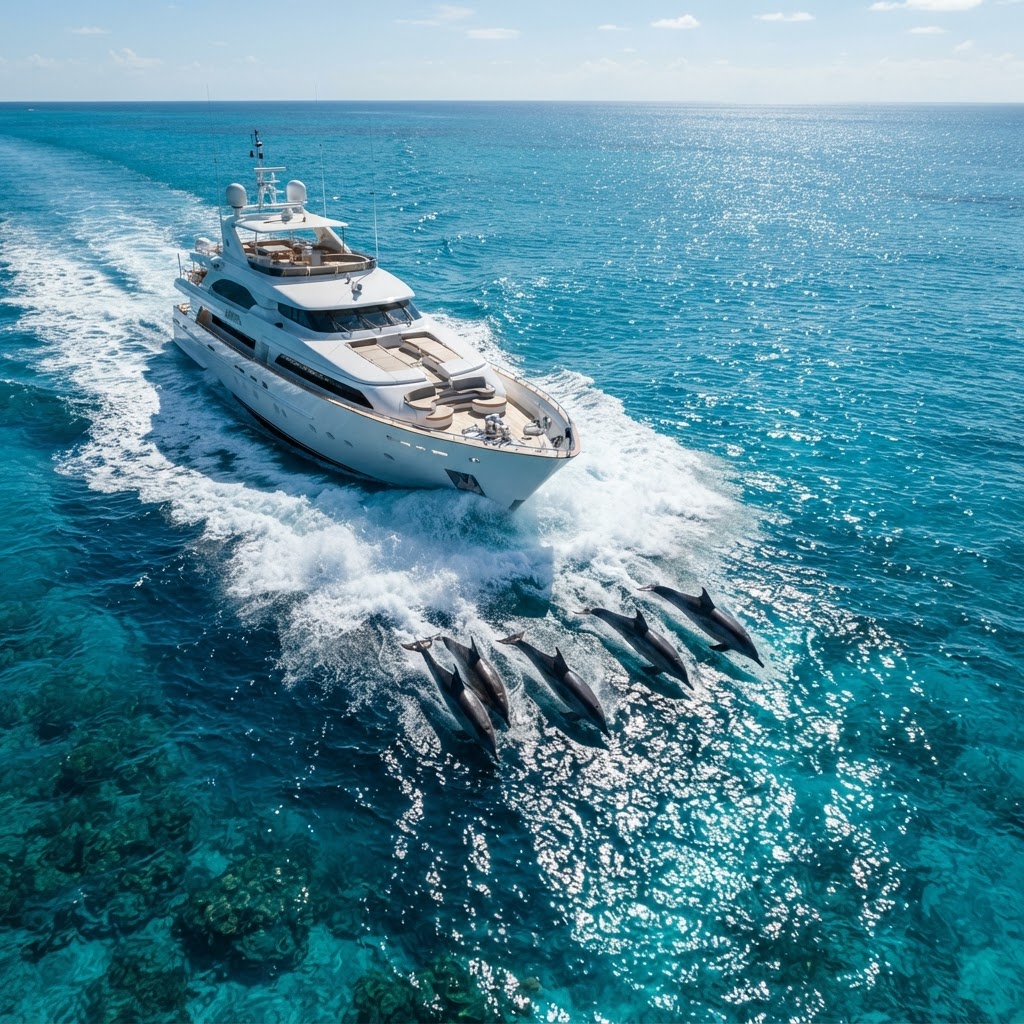
As custodians of the sea, our responsibility when encountering these animals is absolute. The modern yacht is a marvel of engineering, capable of immense speed, but it is also a potential source of disruption in a fragile acoustic environment. Cetaceans communicate, navigate, and hunt through sound, and the intrusion of heavy cavitation from propellers or the sudden change in vessel velocity can be deeply disorienting. Etiquette dictates a measured approach. One should never approach a pod head-on, but rather parallel their course at a respectful distance, maintaining a constant, slow speed that allows the animals to decide whether to interact or retreat. If they approach the bow—a phenomenon known as bow-riding—one should maintain a steady heading and speed, allowing the dolphins to enjoy the pressure wave of the vessel. It is a dance of mutual respect, where the primary objective is to observe without impacting the natural behaviour of the pod.
Seasonal Migrations and the Changing Tides
Understanding the migratory patterns of Mediterranean cetaceans requires a shift in how we perceive the seasons. While many yachts follow the sun, the whales follow the nutrients. In the early spring, the waters are often thick with the microscopic life that will eventually draw the whales from the western basins toward the Ligurian Sea. As summer settles, the water columns stratify, and the whales congregate in areas of high biological productivity. By late autumn, as the seas begin to churn with the coming winter, these populations drift again, often toward the southern reaches of the basin. Planning a route that acknowledges these cycles adds a layer of intellectual depth to any itinerary. It transforms a simple cruise into a scientific pilgrimage, a journey that mirrors the pulse of the earth. When you map your course, look beyond the nearest marina; look toward the canyons and the currents, and you may find that the ocean reveals her secrets to those who know where to look.
The Silent Language of the Sea
Ultimately, the value of witnessing these creatures lies in the humbling shift in perspective they force upon us. In the luxury of a yacht, we are surrounded by the manifestations of human achievement—advanced navigation, bespoke interior design, the pinnacle of hospitality. Yet, when a sperm whale flukes and disappears into the depths, leaving nothing but a smooth "footprint" on the surface of the water, we are returned to a state of primitive wonder. It is a reminder that the sea is not merely a playground, but a sanctuary of profound complexity. To move through these waters with an awareness of the lives beneath our keel is to elevate the yachting experience from a mere leisure pursuit to a communion with the wild. May your next voyage be marked not just by the beauty of the ports you visit, but by the fleeting, silent grace of the sentinels you encounter in the deep.