First Light at Nafplion
We left Nafplion before sunrise, the Peloponnese still dark behind us, the Argolic Gulf ink-black and still. By the time the sun cleared the mountains, we were already making way toward the Saronic Islands, the light turning everything gold.
To sail the Aegean is to understand why the ancient Greeks built their civilisation by the sea. The water here is extraordinarily clear — forty, fifty feet of visibility in the right anchorages — and the islands rise from it with a theatricality that feels almost deliberate.
Hydra and the Rule of Silence
Hydra has no cars. No mopeds, no motorcycles — nothing with an engine. Donkeys carry supplies up the steep stone paths to the houses that cascade down to the port. The effect, in a world saturated with noise and movement, is startling. You arrive by sea and step into a quieter century.
The port itself is one of the great spectacles of Mediterranean yachting: an amphitheatre of neoclassical mansions, their facades ochre and white, reflected in the clear harbour water. In summer it fills with vessels from across Europe; in spring and autumn, it belongs almost entirely to itself.
Take a table at Omilos, the restaurant-club at the western edge of the harbour — tables right at the water's edge, a menu that respects the Greek tradition while pushing gently against its boundaries, the light fading slowly over the Peloponnese. Or walk uphill to the Sunset restaurant for grilled octopus and the best view on the island.
Spetses and the Pine-Clad Coast
South of Hydra lies Spetses, where the scent of pine drifts across the water from the island's forested interior. Spetses has cars — only a few, but enough to distinguish it from Hydra — and the charm of a working island rather than a museum piece. The Old Harbour is one of the finest anchorages in the Saronic: a horseshoe of water enclosed by traditional boatyards and small tavernas, protected from all but the strongest southerlies.
The Cyclades in September
If the Saronic offers intimacy, the Cyclades offer drama. The meltemi wind, which blows hard from the north in July and August, eases in September, making this the finest month to sail this arc of islands — Paros, Naxos, Amorgos, Folegandros — each distinct in character, each spectacular in its own right.
At Amorgos, the monastery of Hozoviotissa clings to a cliff face 300 metres above the sea — a white structure so improbable in its setting that it seems to have been placed there by a special effects department. The walk up is steep but the reward, at the top, is a glass of raki and the best view in the Cyclades.
Santorini from the Sea
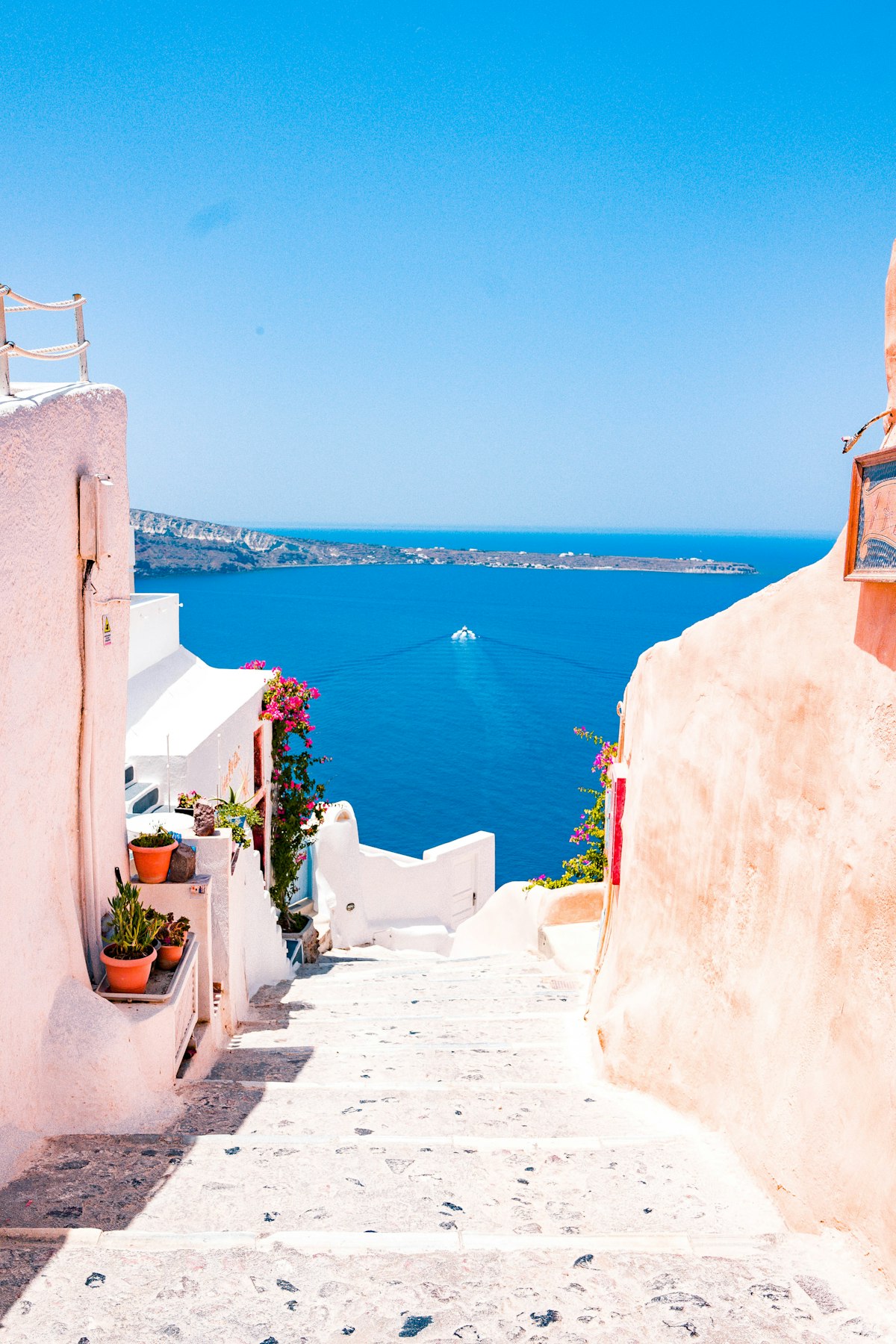
Approach Santorini by water. This is not optional — it is essential. The caldera, formed by one of the largest volcanic eruptions in recorded history, reveals itself as you sail through the gap between the islands: sheer cliffs of black and red volcanic rock rising hundreds of metres from a sea so deep that most yachts cannot anchor, only drift. The white villages of Fira and Oia sit on the crater rim, impossibly high and impossibly beautiful.