To stand at the edge of a modern Mediterranean quay is to participate in a ritual that has remained largely unchanged for millennia. The sensory profile remains constant: the sharp, saline tang of the Aegean, the rhythmic slap of water against weathered hulls, and the restless shifting of light across the harbour mouth. Yet, beneath the polished teak decks of our modern vessels and the neon-lit promenades of contemporary ports, there lies a submerged geography—a ghostly map of the ancient world. The lost harbours of the Mediterranean are not merely archaeological curiosities; they are the architectural skeletons of the first global economy, silent witnesses to the moment when humanity first mastered the temperamental whims of the Middle Sea.
The Architecture of Ambition
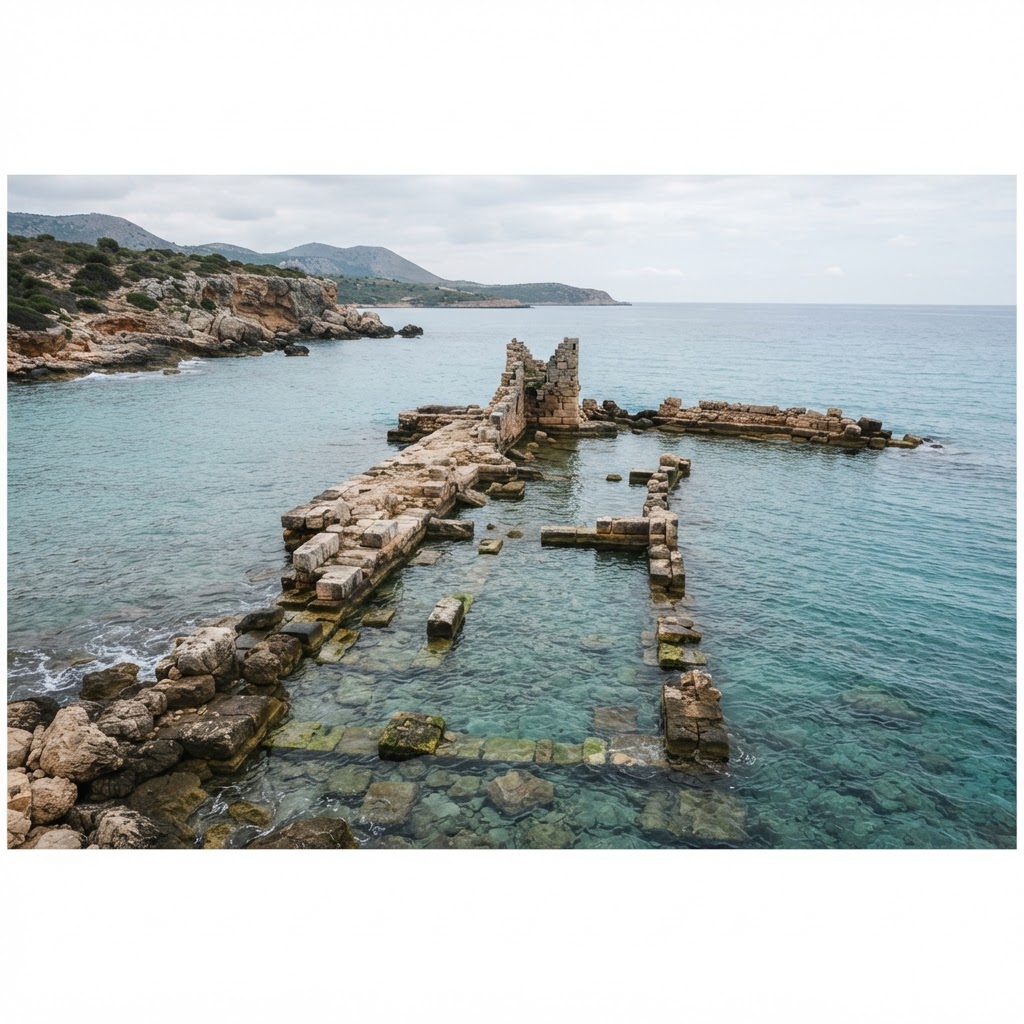
The ancient engineer viewed the harbour not merely as a landing place, but as a statement of power. In the classical era, a port was a projection of the state’s reach, an architectural manifestation of the triumph over the elements. At sites like Caesarea Maritima, established by Herod the Great, the ambition reached a fever pitch. Recognising that the Levantine coast lacked natural havens, Roman engineers utilised hydraulic concrete—a mixture of volcanic ash and lime that hardened under water—to create vast breakwaters where nature had provided nothing but open sand. Today, these structures lie beneath the waves, a submerged testament to the audacity of imperial infrastructure. To sail above them is to realise that the maritime luxury we enjoy today is built upon a foundation of ancient trial and error. The deep, sheltered basin was the invention that allowed the merchant vessel to cease being a seasonal visitor and become the lifeblood of the Mediterranean basin.
The Silence of the Kothon
Perhaps the most evocative relic of the ancient world is the kothon, the secret, circular naval harbour of Carthage. Unlike the sprawling, chaotic commercial ports of the Hellenistic period, the kothon was a masterpiece of military seclusion. From the deck of a passing craft, it is difficult to imagine the frantic activity that once defined this space. It was a place designed to hide the Punic navy from the prying eyes of Mediterranean rivals, a concentric marvel that allowed ships to be hauled onto covered slips for repairs and refitting. Now, it remains a quiet, green-fringed lagoon, a place where history feels strangely compressed. In the stillness of the afternoon, one can almost hear the rhythm of the shipwrights’ hammers and the distant command of the Punic admirals, reminding us that for all our modern navigational technology, the fundamental human drive to control the sea has remained remarkably static.
Merchants of the Levant
The ports of the Levant served as the connective tissue of the ancient world, linking the ivory and gold of Africa with the marble and wine of the north. Tyre and Sidon were not simply trading posts; they were the engines of early globalisation. The ruins of these cities, often partially swallowed by the encroaching tide, tell a story of immense vulnerability. The sea is a relentless architect, constantly revising the coastline, eroding the very stone it once enabled to flourish. When we anchor off these shores today, we are casting our iron into a seabed littered with the debris of centuries—amphorae that once held oil, shattered ceramics, and the remnants of quays that served as the world’s first grand bazaars. There is a melancholy beauty in this erasure, a reminder that even the most bustling, permanent-seeming hubs of our era are subject to the same eventual dissolution.
The Shifting Sands of Ephesus
History is a cruel navigator, and nowhere is this more apparent than in Ephesus. Once a thriving port city of the Ionian League, it sits today several miles inland, marooned by the steady accumulation of silt from the Cayster River. The grand harbour street, which once welcomed ships from across the Roman Empire, now leads to nothing but pasture and the distant, unseen call of the sea. For the modern sailor, Ephesus serves as a sobering reminder of the sea’s mutability. The harbours we treasure today—the sheltered coves of the Balearics or the deep-water inlets of the Dalmatian coast—are in a constant state of transition. To sail these waters is to witness a slow-motion cartography, where the landmarks we rely upon are merely the current arrangement of a landscape that is forever unfolding and receding.
The Aegean Legacy
In the Cyclades, the remnants of ancient harbours are often more intimate, etched into the basalt and granite of the islands. At Delos, the sacred birthplace of Apollo, the harbour was not just a commercial hub but a bridge between the mortal and the divine. The stone bollards to which the ancient galleys were tethered remain, worn smooth by the passage of thousands of years of hawsers. There is a profound continuity here. A boat moored in Delos today occupies the same spatial logic as a trireme did two and a half millennia ago. We inhabit the same maritime architecture, subject to the same winds—the Meltemi that still dictates the rhythm of the passage—and the same necessity of finding refuge as the sun dips below the horizon. The continuity of this experience is what binds the modern yachting enthusiast to the ancient merchant; the sea does not change, and the harbour remains the ultimate sanctuary.
Vessels of Time
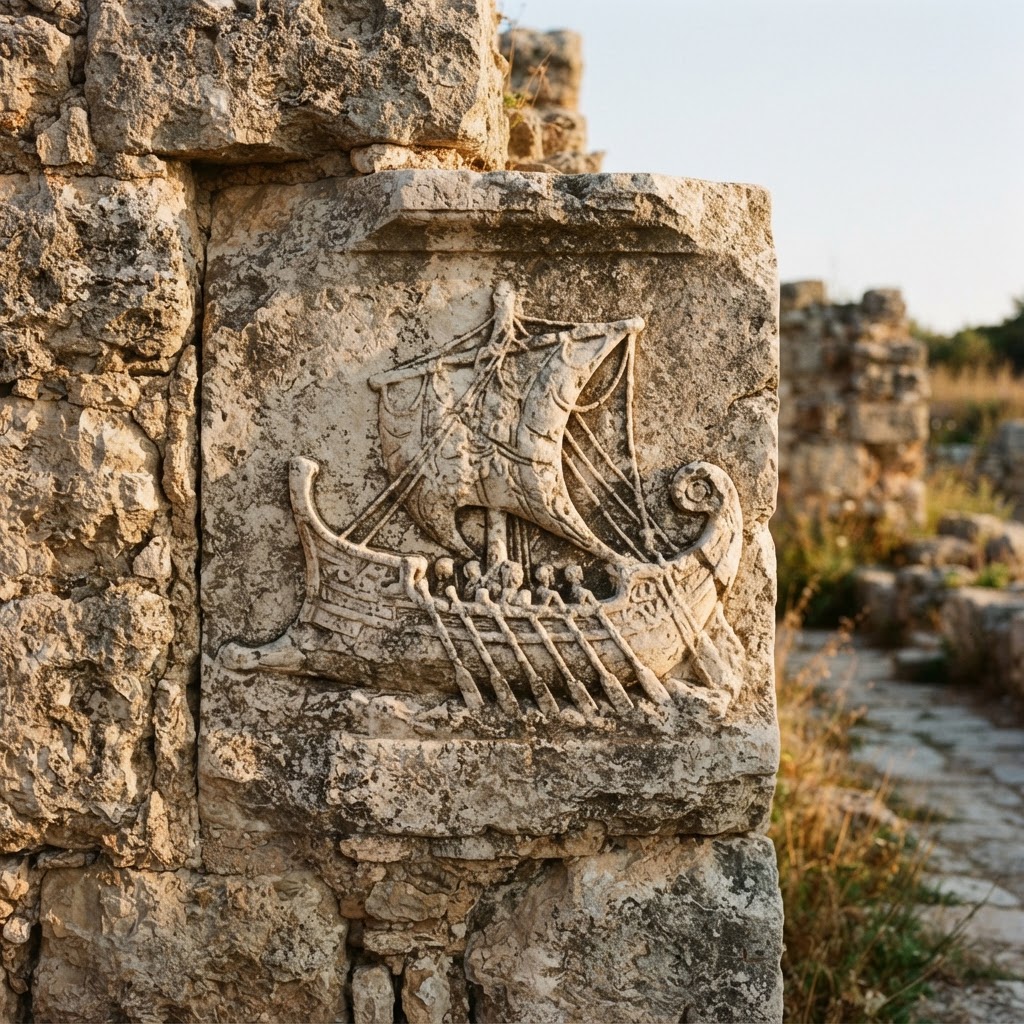
As we navigate the contemporary Mediterranean, we are essentially traversing a vast, liquid museum. The lost ports are beneath us, beneath the kelp, the sediment, and the currents. They represent the first time humanity dared to carve permanent marks into the shifting face of the ocean. Each of these ports, whether buried in silt or submerged under the rising tides of the centuries, serves as a testament to the endurance of the seafaring spirit. When we weigh anchor, we are not just travelling from one destination to another; we are participating in a conversation that began when the first mast was raised and the first rudder dipped into the blue. These ancient harbours remind us that while the ports may be lost, the instinct for the horizon is eternal. We are all, in our own way, carrying on the tradition of those early mariners, perpetually seeking the shelter of the next great bay, and forever drawn to the edge of the known world.