To stand upon the prow of a modern vessel as it slips through the calm, sapphire waters of the Levant is to participate in a ritual as old as the art of navigation itself. Long before the rise of the classical empires, before the Hellenic triremes or the Roman galleys claimed dominion, there existed a people who viewed the Mediterranean not as a barrier, but as a bridge. The Phoenicians, masters of the cedars of Lebanon and the first true architects of global maritime trade, did not merely sail the sea; they articulated it. They were the original architects of the blue horizon, turning the volatile moods of the Middle Sea into a manageable thoroughfare of culture and exchange.
The Architecture of the Cedar Hull
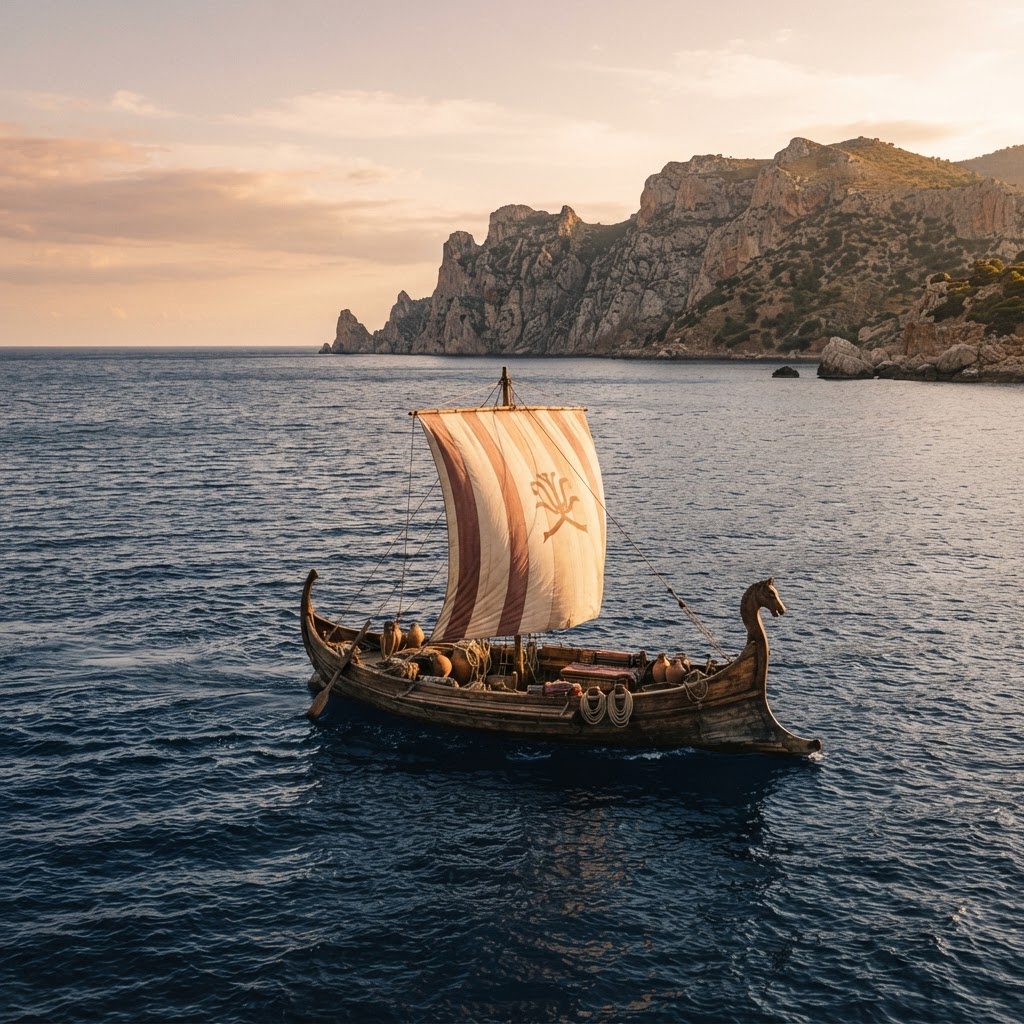
At the heart of the Phoenician triumph lay an intimate understanding of the arboreal giants that populated their homelands. The Lebanon cedar, prized for its durability and resistance to the sea’s corrosive embrace, provided the raw material for a maritime revolution. These ships were marvels of engineering, designed with a rounded hull for stability in the open deep and a shallow draught for navigating the intricate, rocky coves that still entice the modern yachtsman. There is a profound symmetry in the fact that the descendants of these ships—sleek, modern cruisers—now anchor in the very harbours the Phoenicians once surveyed. The sheer audacity required to traverse the Pillars of Heracles in such vessels speaks to a temperament that, while obscured by the mists of three millennia, feels surprisingly familiar to anyone who has ever felt the pull of a distant, unseen coastline.
Ports of Call and the Geography of Exchange
Phoenician navigation was defined by the necessity of the port. Tyre, Sidon, and Byblos were not merely administrative centres; they were the anchors of an expansive network that stretched from the lush Levantine coast to the mineral-rich shores of the Iberian Peninsula. These were not the sprawling, industrial harbours of the modern era, but intimate, sheltered basins that favoured the strategic geography of headlands and offshore islets. To visit these locations today is to grasp the sheer logistical genius of the ancient Phoenician merchant-mariners. They sought out natural protection against the prevailing winds, creating a chain of supply points that enabled a seasonal trade cycle. This rhythm of arrival and departure, dictated by the stars and the currents, established the fundamental navigation routes that remain the arteries of Mediterranean yachting today.
The Language of the Sea and Script
Beyond the exchange of purple dye, silver, and tin, the Phoenicians facilitated a cultural metabolism that changed the trajectory of human history. Their most enduring contribution, the alphabet, was a pragmatic response to the needs of a mercantile society. It was designed for speed, efficiency, and clarity, stripping away the complex iconography of their neighbours in favour of a system that could be inscribed on papyrus or etched into clay with haste. As they moved from port to port, this script travelled with them, effectively democratising literacy. There is a contemplative beauty in the thought that the roots of our own ability to communicate across great distances were sown by those who were more concerned with the tallying of cargo than the preservation of philosophy. It serves as a reminder that the most significant innovations often emerge not from the ivory tower, but from the demands of the open road.
Cartographers of the Celestial Sphere
For the Phoenician navigator, the sky was the ultimate chart. While their contemporaries remained timidly within sight of the coast, the Phoenicians looked to the Pole Star—a practice the Greeks later referred to as the 'Phoenician Star'. This reliance on celestial mechanics allowed them to traverse the open water during the night, effectively doubling their operating range. The solitude of the night watch, a hallmark of the long-distance voyager, finds its historical ancestor in these early sailors who stood at the stern of their vessels, guiding their course by the slow, steady wheeling of the heavens. It requires a certain quietude of spirit to trust in the stars, a discipline that modern technology has largely automated but which remains a fundamental skill for those who seek to truly understand the sea.
The Legacy of the Maritime Merchant
As we look out over the Mediterranean from the teak deck of a modern yacht, we are, in a very real sense, inhabiting the Phoenician legacy. The luxury of modern travel, the ease with which we move between cultures and climates, is the ultimate evolution of the Phoenician trade model. They were the intermediaries of the ancient world, connecting the tin mines of Britain to the gilded palaces of the Near East. They taught us that the sea is not a divide, but a connector; a vast, fluid space that invites exploration. Theirs was a story of resilience, of an uncompromising drive to see what lay beyond the next promontory, and a recognition that the world is far larger and more interconnected than any single coastline would suggest.

Echoes in the Modern Wake
There is a peculiar, persistent resonance in the way we continue to engage with the Mediterranean. We still seek the same sheltered anchorages; we still rely on the same prevailing winds that determined the fate of a Phoenician dromon. The tools have changed—carbon fibre has replaced cedar, and GPS has superseded the Pole Star—but the fundamental motivation remains unaltered. It is the pursuit of the horizon, the lure of the distant shore, and the belief that the sea offers a clarity of existence that the land simply cannot provide. The Phoenicians understood this intimately. They left behind no great epic poems, no towering monuments to their own hubris. Instead, they left behind a network, a way of life, and the enduring understanding that the sea is, and always will be, our most faithful companion.