There is a particular quality to the Mediterranean light as it catches the crystalline pans of the Camargue or the ancient Salinas of Trapani. It is a brilliance that feels less like sunlight and more like a refraction of history itself. To sail these waters is to traverse a topography defined not merely by the azure expanse, but by the jagged, geometric alchemy occurring along the margins where land surrenders to the sea. Salt, the invisible architect of human movement, has always been the primary currency of the coast, a substance that allowed us to tether ourselves to the rhythmic uncertainty of the tides.
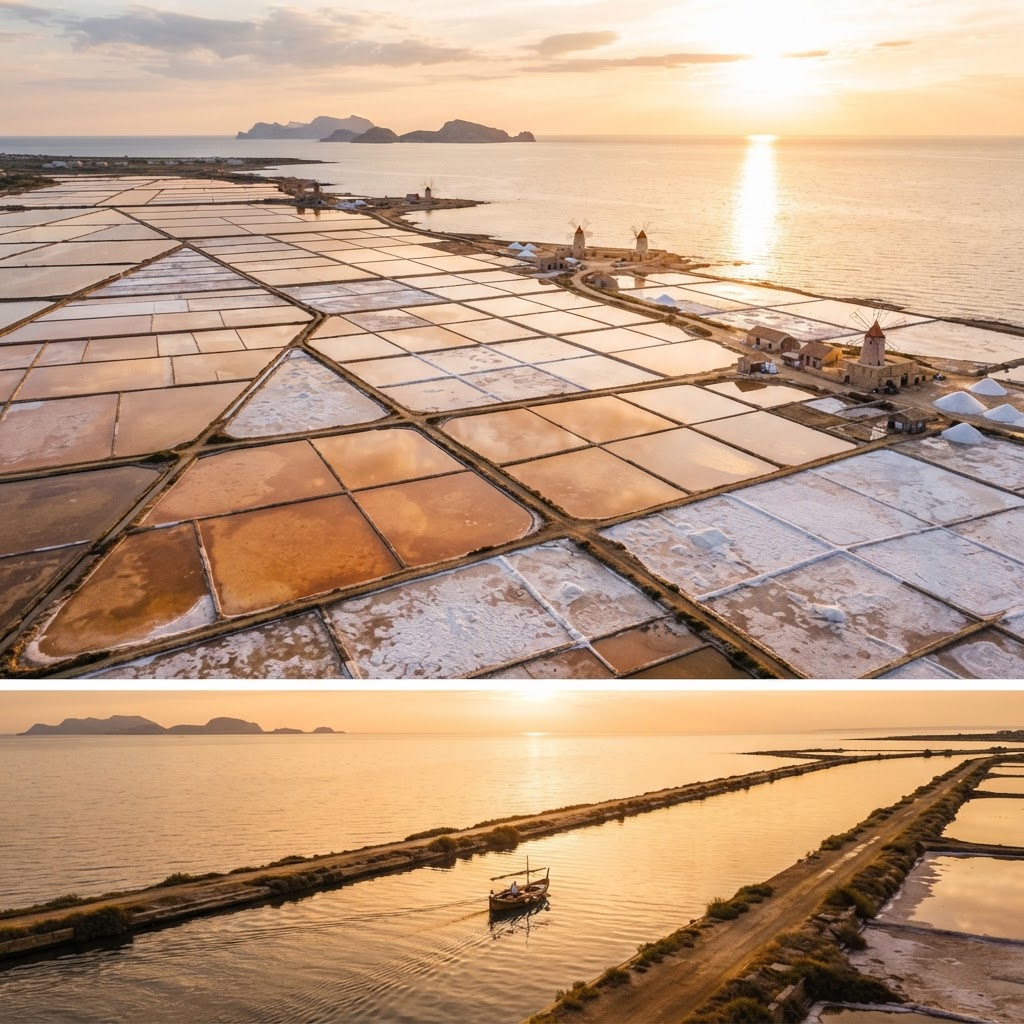
The White Gold of the Tideless Sea
In the antiquity of the Mediterranean, salt was the ultimate sovereign. Long before the advent of refrigeration, the ability to arrest the inevitable decay of biological matter was the difference between survival and starvation. For the Phoenicians, the Greeks, and later the Romans, the salt pans were the true seats of power, far more vital than the marble halls of the interior. By harnessing the sun and the steady, arid winds, these cultures created a transformative landscape. Salt was the catalyst for the first great maritime trade routes, forcing ships to navigate not just for spices or silks, but for the fundamental seasoning that permitted long-voyage provisioning.
When we anchor off the coast of Sicily or Puglia today, the white mounds shimmering against the dusk serve as a reminder that our modern seafaring pleasures are built upon these ancient logistics. The salt pan is a delicate industrial masterpiece; a series of interconnected basins where the concentration of brine is orchestrated with the precision of a clockmaker. It is a slow, meditative process that rejects the frantic pace of modernity. In the quiet evaporation of a shallow lagoon, the sea gives up its essence, leaving behind a mineral harvest that is both a preservative and a seasoning, a bridge between the sterile purity of the ocean and the vibrant complexity of the larder.
The Geography of Preservation
To understand the cuisine of the Mediterranean coast, one must look at the jar, the brine, and the air-dried fillet. The preservation of fish—the anchovy, the sardine, the tuna—is the narrative thread connecting the salt-makers of the marsh to the coastal kitchens of the present day. Consider the Bottarga of Sardinia or the Colatura di Alici of Cetara. These are not merely ingredients; they are the distilled memory of the sea, preserved through the application of salt and time. Each represents a sophisticated response to the volatility of a catch, a technique honed over centuries to ensure that the bounty of the spring could sustain a village through the lean months of winter.
This preservation culture created a distinct coastal identity. While the interior regions of Europe relied on smoke and cold for curing, the Mediterranean coast leaned into the sun. The salt, harvested from the very waters where the boats were launched, became a unifying element. Whether it was the curing of olives to soften their bitterness or the salting of cod brought in from distant northern waters, the presence of salt redefined the culinary boundaries of the region. It allowed for the development of a pantry that could withstand the heat, facilitating a gastronomic sophistication that persists even in our era of instant consumption.
Wind, Water, and Human Will
The relationship between the wind and the salt pan is one of quiet, violent beauty. In places like the Salinas de Janubio in Lanzarote or the coastal marshes of Ibiza, the wind is a primary agent. It hastens the evaporation, it carries the scent of the brine, and it dictates the daily rhythms of those who manage the harvest. This is labor-intensive work, requiring a deep, visceral understanding of barometric pressure and tidal influence. It is a form of environmental stewardship that has remained remarkably consistent for millennia, providing a rare continuity in an otherwise rapidly evolving world.
From the deck of a yacht, one observes these landscapes with a sense of detachment, yet they are the essential moorings of the maritime experience. The coastal communities that grew around these salt works are the custodians of a heritage that values patience above all else. In a world increasingly defined by the ephemeral, the salt pan represents a commitment to a process that cannot be hurried. One does not rush the crystallisation of brine; one must wait for the sun to finish its work. This patience is reflected in the food cultures of the coast, where the slow-curing process creates depths of umami that modern industrial alternatives can only dream of imitating.
The Alchemy of the Kitchen
When we discuss the culinary heritage of the Mediterranean, we often focus on the freshness of the product—the tomato plucked from the vine, the fish caught at dawn. Yet, it is the salt that brings this freshness into relief. A pinch of fleur de sel, harvested from the top layer of a salt marsh, changes the molecular architecture of the dish. It does not merely make food 'salty'; it draws out the inherent sweetness, the mineral undercurrents, and the hidden complexities of the ingredients. It is the connective tissue of the Mediterranean palate.
In the grand kitchens of the coastal villas, the use of sea salt is a ritual. It is a dialogue between the history of the pan and the quality of the harvest. Whether incorporated into the dough of a focaccia, used to crust a whole Mediterranean sea bass for baking, or sprinkled over a dish of grilled calamari, salt acts as an enhancer, a clarifier, and a guardian of taste. The coastal cook understands that there is no substitute for the mineral variety of their local source, and this regionality is what makes Mediterranean gastronomy so endlessly diverse, even while sharing the same fundamental ingredients.
A Legacy of Resilience
As we look toward the future, the legacy of the salt works is increasingly fragile. Climate change, the encroachment of tourism, and the lure of industrial salt production threaten to extinguish these ancient, human-scale operations. Yet, there is a growing appreciation for the artisanal, for the salt that carries the specific terroir of its lagoon. The resurgence of interest in traditional harvesting methods is not mere nostalgia; it is a recognition of the value of low-impact, sustainable food production. To support these salt pans is to support the preservation of a way of life that has defined the Mediterranean for as long as we have been sailing its waters.
We would do well to remember that every time we taste the depth of a cured anchovy or the delicate crunch of coarse sea salt, we are participating in an ancient rite. We are connecting with the generations of sailors and salt-makers who looked at the vast, shimmering surface of the Mediterranean and saw not just an obstacle to be crossed, but a pantry to be curated. As we continue to navigate these routes, let us do so with a renewed reverence for the white gold that made it all possible, ensuring that the crystalline brilliance of the salt pans remains a part of our shared maritime heritage.