A perfect yacht charter rarely begins when guests step on board.
It starts much earlier, with a conversation about how people want to feel, what kind of days they imagine, and which details will turn a beautiful yacht into the right setting for their time away. The yacht matters, of course. So does the destination. Yet the difference between a good charter and one that feels effortless often comes down to planning, communication, and the crew that knows how to bring a client’s vision to life.
Some guests want long lunches in quiet bays, children busy with water toys, and evenings spent at anchor. Others want an energetic itinerary with beach clubs, fine dining ashore, and a full social calendar. Neither style is better. The point is that the best charters are shaped around the people on board, not around a fixed idea of what a yacht holiday should be.
Why the best yacht charters start with the guest’s vision
The early planning stage is where the tone of the whole charter is set. Before routes are refined or menus discussed, there needs to be a clear picture of the guests themselves. Who is travelling? Are there young children, teenagers, older family members, or friends celebrating a milestone? Is privacy the priority, or access to well-known ports and lively nightlife?
That is where the charter brief becomes more than a formality. A thoughtful brief helps turn broad hopes into practical choices: the right yacht, the right crew profile, the right pace, and the right region for the season.
A common tool in this process is the preference sheet. It may sound simple, but it can shape nearly every part of life on board. When completed properly, it gives the captain, chef, and interior team a much clearer view of what guests enjoy and what should be avoided.
- Guest profile: ages, group dynamics, celebrations, sleeping preferences
- Favourite cuisines
- Lifestyle on board: formal dining or relaxed service, early mornings or slow starts
- Water sports interests
- Practical details: allergies, medical notes, mobility needs, dietary requests
The more complete that picture is, the more naturally the charter can unfold.
Yacht charter planning behind the scenes
Once a yacht is selected and the guest brief is clear, a large amount of work begins behind the scenes. This is the part clients do not always see, yet they feel its impact every day of the charter.
The itinerary is one of the most obvious examples. Guests may have a list of places they would love to visit, but a working itinerary has to do more than look appealing on paper. It needs to account for distances between ports, likely weather, berth availability, customs requirements, opening times ashore, fuel planning, tender operations, and how much movement actually suits the group.
A strong charter plan leaves room to breathe. It is not about filling every hour. It is about creating a flow that feels balanced.
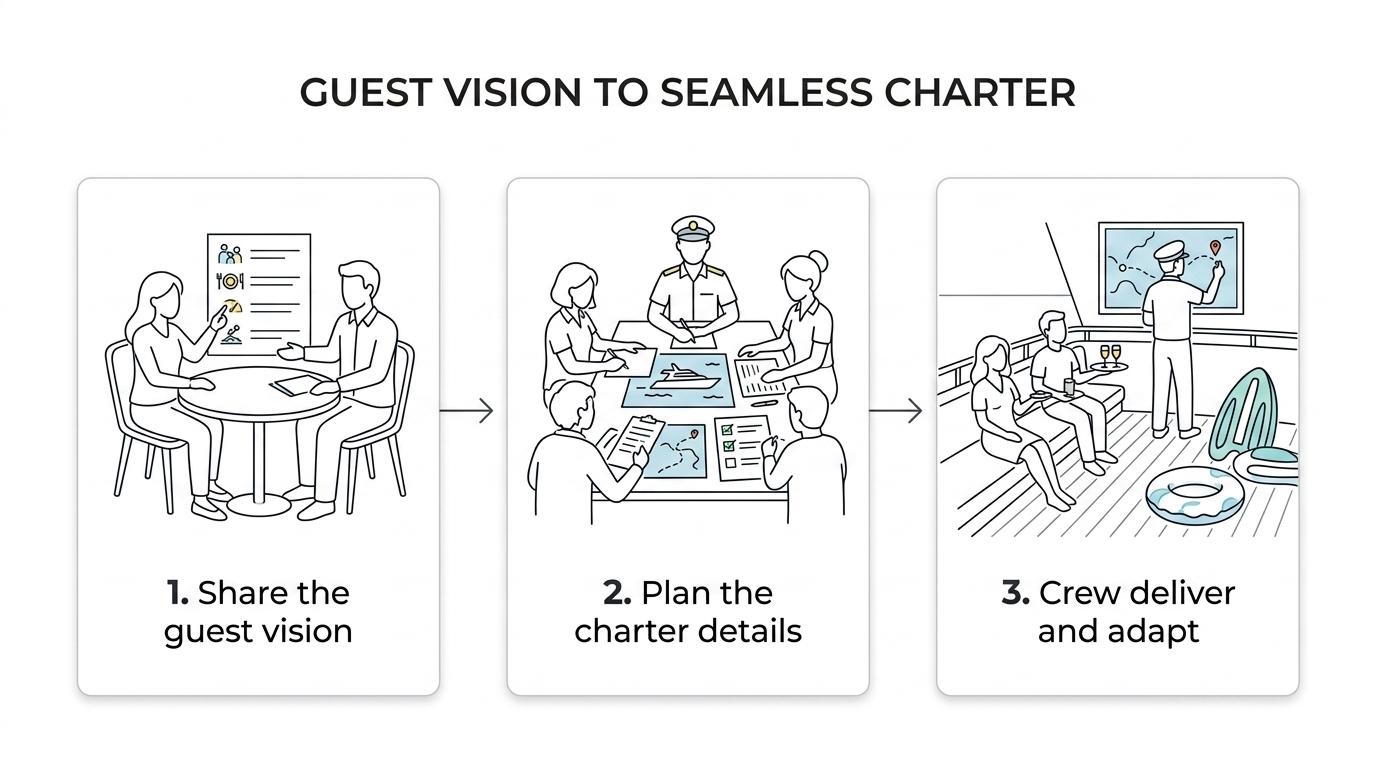
On board, that planning extends into food, drink, cabins, laundry, flowers, toys, safety equipment, and timing. Provisioning has to be arranged with care. Special requests may need sourcing days in advance. Shore-side reservations may need to flex if the weather shifts or the guests decide they want to stay in a bay longer than first planned.
The result should feel easy to the guest, even though it is anything but casual behind the scenes.
| Planning area | Who usually leads it | Why it matters to guests | |---|---|---| | Itinerary refinement | Captain with charter team input | Better pacing, safer passages, smarter harbour choices | | Provisioning and menus | Chef and interior team | Meals feel personal rather than generic | | Berths and logistics | Captain and shore support | Less waiting, fewer last-minute disruptions | | Water toys and activities | Deck team and captain | More time enjoying the day, less time organising | | Guest comforts | Chief stewardess and interior team | Cabins, service style, and daily rhythm feel right |
The captain’s role in yacht charter success
The captain is often the central point around which the entire charter turns. Guests may see the captain greeting them on arrival, discussing the route, or checking in during the week, but the role is much broader than that.
A capable captain is part host, part operations lead, part safety manager, and part problem-solver. This person coordinates the crew, refines the itinerary in real time, manages port authorities and local regulations, and makes judgement calls that affect both comfort and safety. Industry charter standards also place formal responsibilities on the captain, including making sure the crew hold the right qualifications and, where needed, correct visas for the itinerary.
There is also a softer side to the job. A good captain reads the mood on board. Some groups enjoy regular updates and options. Others prefer the details to be handled quietly in the background. Getting that balance right is a skill.
When weather changes, a marina booking falls through, or a guest asks for a different plan at lunchtime, the captain is the person bringing all the moving parts together.
Why yacht charter crew matter more than yacht size
Guests often first respond to a yacht’s exterior lines, deck spaces, beach club, or master suite. Yet what they remember most vividly is often service.
Professionally trained crew are at the heart of that experience. From the most senior officers to junior deckhands and stewardesses, each person affects how the charter feels. On a mid-size charter yacht, there may be six to fifteen crew members. On larger yachts and megayachts, that number can rise well beyond thirty. The scale changes, but the principle stays the same: the crew are not a backdrop. They are a major part of the charter itself.
On many yachts, there may even be more crew than guests.
That ratio allows for one-to-one attention, but only if the team is well briefed and works well together. Technical skill matters. So does timing, discretion, warmth, and the ability to anticipate what a guest needs before being asked.
After all, luxury service is rarely loud. It is usually the opposite.
- Chef: creates menus around tastes, allergies, and the mood of each day
- Chief stewardess or purser: sets the service tone and manages the interior experience
- Deck team: handles watersports, tender runs, setup, maintenance, and guest safety
- Engineers
- Housekeeping and cabin care
- Child-friendly support
A polished crew can make a smaller yacht feel exceptional. A disconnected crew can leave even a spectacular yacht feeling flat.
How preference sheets shape the onboard yacht charter experience
The preference sheet deserves more credit than it usually gets. It is one of the strongest tools for turning a charter from standard luxury into something that feels personal.
Food is the clearest example. A chef who knows that one guest loves Mediterranean seafood, another is vegetarian, and a child wants simple pasta after swimming can plan properly from day one. The same applies to wines, preferred meal times, snack habits, coffee choices, and whether dinners should feel formal or relaxed.
Yet the preference sheet goes well beyond meals. It may include favourite flowers, pillow types, exercise habits, spa requests, music tastes, toy priorities, birthday plans, and how much structure guests want in the week. Some families want packed days. Others want no schedule beyond lunch.
That information helps the crew prepare, but it also helps them adapt. If a group had planned to dine ashore and then decides to stay on board after sunset, the interior team and chef can pivot more gracefully when the groundwork has already been laid.
Yacht charter service standards, safety, and confidentiality
Part of what makes a charter feel calm is knowing that standards sit underneath the experience. Guests may not ask about crew certification, flag-state rules, safety briefings, or confidentiality protocols, but these things matter.
Formal charter agreements and accepted industry practices generally require a suitably qualified captain and properly trained crew. They also set expectations around guest limits, operational procedures, and how information related to the charter is handled. Privacy is a serious part of modern yachting, and good crews treat it that way.
Safety briefings matter too, even when they are delivered lightly and without fuss. Guests should be clear on practical points including swimming areas, tender use, water sports rules, smoking policies, internet limitations in certain cruising grounds, and any local restrictions that affect the itinerary.
The best crews make all of this feel natural rather than bureaucratic.
What guests do not always see during a yacht charter day
A charter day can look beautifully unhurried from the sundeck. Breakfast appears at the right moment. The toys are ready. The tender is alongside. Cabins are refreshed while guests swim. Cocktails arrive just before sunset.
Behind that smooth surface, the crew are in constant motion.
Deckhands may be launching toys, monitoring guests in the water, washing salt from decks, preparing fenders, assisting with anchoring, and setting up the next activity. Inside, stewardesses are resetting lounges, coordinating service, managing laundry, refreshing cabins, and adjusting the pace of the day around guest habits. The chef is planning not just the next meal, but the next two. The engineer keeps systems running quietly in the background. The captain is already thinking ahead to weather, berth access, local traffic, and the following morning’s departure.
This is why a successful charter is a team effort, not a solo performance.
When yacht charter plans change, the crew make the difference
No matter how well a charter is planned, the sea has its own say. Wind shifts. A favourite bay becomes crowded. A beach restaurant cancels a reservation. Customs timing changes. Guests wake up and decide they want something different from the original plan.
That is not a sign that the charter is going wrong. It is part of yachting.
What matters is how the crew respond. An experienced team can reroute the day, suggest a better anchorage, arrange a last-minute lunch setup, or change the order of the itinerary without making guests feel the strain behind the change. This kind of adaptability often separates an excellent charter from one that feels rigid.
- Calm under pressure
- Quick communication
- Practical creativity: finding alternatives that still match the guest’s mood
- Local knowledge: knowing which bays, marinas, or restaurants work as strong back-up options
Guests tend to remember how a team handled the unexpected more than the unexpected itself.
What people remember most from a yacht charter
People do remember the yacht. They remember the aft deck breakfast, the still water at sunrise, the perfect mooring in a small harbour, and the night the chef served exactly what everyone wanted without a long discussion.
They also remember how they were made to feel.
That feeling comes from many small moments done well: a crew member learning a child’s favourite drink on day one, a captain adjusting the route so the sea stays calm for lunch, a stewardess setting the table differently for a birthday dinner, a deckhand having the toys ready before anyone asks, a chef sending out something simple and comforting after a long swim rather than something overworked.
The perfect yacht charter is rarely defined by one grand gesture. More often, it is built by preparation, judgement, and a crew that knows how to turn a plan into an experience that feels natural from start to finish.